Artificial Intelligence & Technology
Building an AI App Is Easier Than Convincing Someone to Pay for It
AI makes building and launching faster than ever. Turning curiosity into purchases and renewals is the harder product challenge.

One of the most striking things about AI products is how easily they attract a first try. Someone signs up, tests a feature, and gets a result that would have seemed impossible a few years ago.
Then the team looks at the orders. People are interested, but few are buying.
This gap is easy to overlook. Free users show that a product has attracted attention. They do not yet show that people want to pay for it, or that they will still need it next month. And when every AI request carries a cost, a growing free audience can make that gap more painful.
The subscription a customer already has
An AI app competes for more than a place on someone's home screen. It competes for a place in their monthly budget. Many potential customers already use ChatGPT, Gemini, or Claude. They may be paying for one of them, or they may be satisfied with a free plan. Either way, a new app has to answer a simple question: Why should I pay for this as well?
The large assistants can already draft text, analyze files, brainstorm ideas, write code, and create images. They keep adding capabilities. If a specialized product offers one of those tasks with a nicer interface, a customer may enjoy trying it but still decide that their existing assistant is good enough.
This doesn't mean every specialized app is doomed. People pay for a finished job: a reliable output, useful context, a workflow that saves effort, or an outcome they cannot easily reproduce in a chat window. A general assistant can give someone instructions for improving a CV. A focused product could make the process easier by collecting the right information, showing specific weaknesses, producing a polished version, and helping the user apply. The distance between those experiences is where a product can earn its price.
Curiosity is easy to mistake for demand
AI creates a remarkable first impression. That makes signups, one-off use, and social traffic tempting measures of success. But a person trying a feature because it is interesting is different from a person returning because it solves an ongoing problem.
The distinction shows up in wider app data too. RevenueCat's 2026 subscription app report finds that AI apps in its dataset start trials at a higher median rate than non-AI apps, while retaining fewer subscribers after twelve months across weekly, monthly, and annual plans. These are category benchmarks, not a prediction for any individual product. They show why an impressive first session is only the beginning.
There is another limit: the customer's attention and subscription budget. In a 2025 consumer AI review, Andreessen Horowitz cited Yipit data suggesting that only 9% of consumers paid for more than one subscription among ChatGPT, Gemini, Claude, and Cursor. That figure concerns those major tools, not all AI apps. Still, it illustrates how hard it can be to become someone's next recurring payment.
The economics of “free” are different with AI
For a traditional software product, an inactive free account may cost very little. An active free user of an AI product can trigger model calls, image generation, storage, and other expenses. More usage can mean a larger bill before it means more revenue.
That makes the free tier a product decision, not just a marketing decision. It should let people see the value, while leaving a clear reason to pay. If the best result is always free, upgrading feels unnecessary. If users hit a paywall before they understand the product, they leave. Finding the right boundary takes experiments with real customer behavior, not just a pricing page that looks reasonable to the founder.
Subscriptions are also not automatically the right answer. A product used only when someone updates a CV, prepares an interview, or creates a particular image may fit credits or a one-time purchase better than a monthly plan. The price should match when the customer gets value.
The question every AI product has to answer
Before adding another AI feature, a useful question is: What will a customer come here to finish, and why would they choose this product over opening their usual AI assistant?
Answering that question requires looking at whether people return to the same task, where they stop between first use and checkout, and whether paying users get enough value to stay. Customers who say “this is cool” but do not buy may reveal more through their hesitation than through another feature request.
For a specialized app, the strongest answer may be proprietary context, integration into an existing workflow, consistent quality, or the convenience of delivering the finished result. AI is a powerful part of that experience. It cannot be the whole reason to charge for it.
Small teams can still build valuable AI businesses. The challenge has changed. Building and launching is faster than ever, but customers can also solve more problems with tools they already have. A signup shows curiosity. A purchase shows a reason to choose a product. A renewal shows that the product kept delivering value.
That is the gap an AI app must close to become a business.
Related topics
You may also like

The Operating System After Apps: What Happens When Software Understands Your Goal?
What happens when software starts with your goal instead of an app? A practical vision for intent-driven operating systems, adaptive workspaces, and trustworthy AI agents.
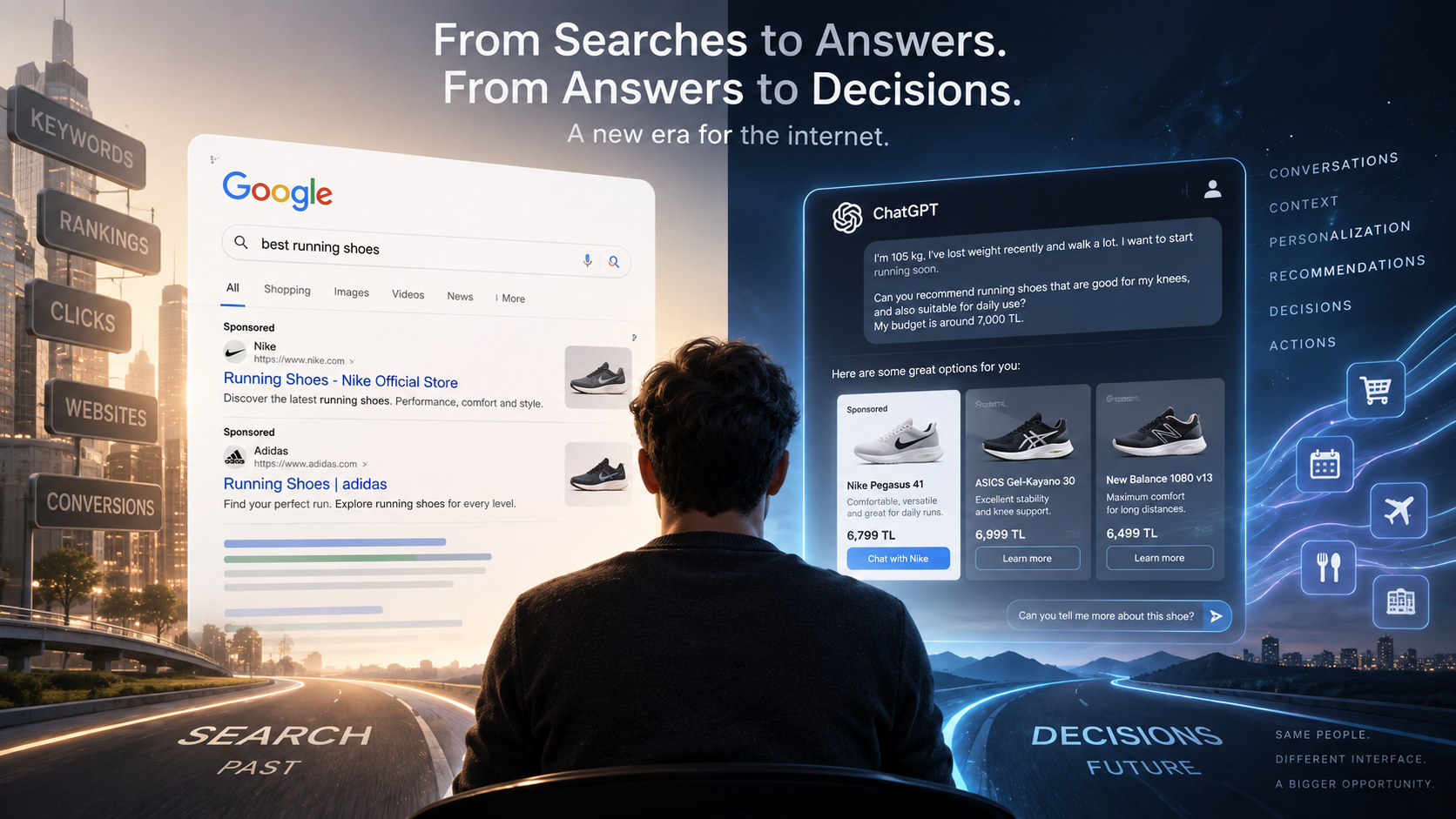
Will Google Lose Power as LLMs Become Advertising Platforms?
As ChatGPT and other LLMs introduce sponsored content and AI agents, the battle for internet advertising may shift from search engines to decision engines. What does this mean for Google?

How Do You Communicate With Someone When You Share No Language?
If two intelligent beings share no language, culture, or even senses, how could communication begin? A look at first-contact communication through mathematics, physics, patterns, and shared reality.